What is morality? Are there any objective morals that every human being must follow? Is there a logical or scientific source for an unquestionably factual code of ethics? These are classic topics of debate and discussion, and the answer as usual seems to remain elusive to the thinking mind. Perhaps the most frequently asked question is whether or not someone can be moral without having any religious beliefs. As is the case with many debated topics, the definitions of each of the terms can play a fundamental role in the outcome of the argument. Although clearly defining morality is crucial, some simple definitions can lead to deceptively simplified and misleading results. It is very important to make sure that the definition doesn't distort the common notion of the word.
Let's first start by supplying a definition, and then see if it can fit the context of the common uses of the actual word. In order to answer questions of morality, let's start by defining morality simply as "the following of rules." A moral person is therefore one that follows rules, and morals are the rules that are followed. Conversely, an immoral person is one that does not follow any rules. The substitution of this word seems at first glance to fit pretty accurately into the widely accepted usage of the concept of morality. In the absence of any counter example it seems proper to stick with this definition and use this simplified form of the concept to tackle some of the more problematic issues involving its usage.
Now let's try to answer some of the questions that are commonly discussed regarding the nature of morality. First of all, what is morality? This question is answered through the definition: Morality is the following of rules. But this definition doesn't qualify the kind of rules, and therefore, the following of any rules must be categorized together with morality. There would therefore be no difference between someone who makes it his or her job to give car rides to other people and a person that goes out of his or her way to find a hitch every morning. Each person is equally moral because each is following self described rules. Let’s look at another question. Are there any objective morals that every human being must follow? In other words, do humans have to follow certain rules? Well technically humans have to perform certain life functions if they wish to stay alive. But nothing prevents people from doing what they want. Humans don't have any more rules than common insects. Now, is there a logical or scientific source for an unquestionably factual code of ethics? Well it is possible to say that the laws of nature give humans certain rules. But these rules can't be broken, and therefore, to follow these laws doesn't involve any voluntary action. Therefore, it seems that there are no scientific morals in the sense that humans have rules that they should intentionally place upon themselves. It can be said that normal humans should follow certain behavior patterns, but like any animal, there is nothing inherently wrong with deviating from the norms of the species. Finally, let’s analyze the most highly debated topic, and see what light this definition game can shed on the subject. Is it possible to have morality without religion? Although this question seemed difficult, the new definition makes it look like a joke. Of course it's possible to follow rules even if one is not religious. Just make rules and follow them. A person may do nothing more than decide to always buy gas from the same gas station and his actions have fallen into the category of moral practices.
After answering these questions, although not running into any logical fallacy, the definition seems to have strayed far from the common usage of the concept of morality. People think of a moral person as one that does what's right. Things like murder are considered immoral, and things like charity are considered moral. Morality seems to be more connected with certain universal principles of right and wrong. Furthermore, right and wrong seem to be intimately connected with a transcendental or mysterious purpose of existence. The concept of morality begins to sound very much like religion. The definition introduced doesn't seem to have anything to do with these commonly accepted morality topics.
Although a clear definition of morality may remain elusive, people seem to have an ability of sensing morality, and certain things are considered right and others are considered wrong. But there doesn't seem to be any logical justification for any of these practices, and scientific inquiry alone seems to leave us with few answers in these matters. It would therefore seem that morality is only achieved through religious beliefs.
Some scientists and philosophers have attempted to create logical rules and reasons behind certain morals. Based on these arguments, morality can be subject to scientific inquiry and certain actions can be deemed scientifically or logically wrong. The claim is that these rules are not connected with any purpose or religion, yet they are still binding on every individual. Morality can be claimed as a kind of social contract that is the best path for a human to take in order to derive the most pleasure from life. It can be argued that people should behave morally as a kind of insurance policy against adverse social interactions with other individuals. It can also be argued that morals are a promotion of the collective good or pleasure of human beings or any conscious being. Acting morally would be the right thing to do inasmuch as it causes more happiness in the world. However, these definitions of morality require their own postulates or world view, and most of them don't fit the common notion of morality either. The social contract approach has its problems. Naturally a weak person would want everyone to agree not to murder. But a powerful individual may not wish to take on the insurance that the social contract has to offer. Additionally, some people may not value life, and they may not care if they die. Regarding the common good of humanity, why should someone want to spread goodness? It may seem nice, but there is no logical reason for someone to give up pleasure in order to share it with others. Both of these approaches to morality have their own world views that are not necessarily inherently logical or shared by everyone.
Perhaps the most fundamental flaw in any of these definitions of morality is the lack of the status symbol attributed to the moral individual. A moral person doesn't just follow certain rules in the same way that people chose different flavors of ice cream. A moral person should be given a higher status than an immoral one. A certain level of holiness or awe should be attributed to one that does good things for goods sake. But this concept is quite foreign to the logical mind as well. Although certain actions may be optimal or smart, nothing can make one person truly better than another person. Both will remain human no matter what they decide to do or what they happen to accomplish. With the above definitions of morality, neither a murderer nor a philanthropist can be considered a better person. Does a person fall to a sub-human status if he or she refuses to buy health insurance? Why should someone fall to a lower status just because he or she does not wish to engage in a social contract? Additionally, why should someone achieve a higher status just because he decides not to murder for the selfish reason of not wanting to be hurt by others? Although admittedly completely illogical, a moral person must somehow surpass an immoral person in what must be a spiritual or religious plain. This is the only way to give the common notion of morality the proper definition that it deserves.
It seems quite clear that the commonly accepted notion of morality is intimately connected with one's religion or world view. The common experience of morals escapes the realm of logical reasoning or scientific enquiry. Although it is possible to give definitions to suit one's arguments, these definitions may not necessarily be satisfactory in their description of common experience.
Saturday, January 15, 2011

Tuesday, January 11, 2011
My Thoughts of Trains
Over the past week I have had a lot of time to ride the subway. Along with the long and tiring commutes came some very interesting trains of thought. There is no limit to the amount of interesting experiences that are possibly encountered while riding MTA subways, and I feel I have already had my fair share of those. However, just being forced to sit on a train full of random people for more than an hour can create a wellspring of very interesting thoughts even without any overly interesting incidents. I have therefore decided to relate some of my interesting subway thoughts along with an intuitive rule of the rails.
While on a long train ride to a fairly unpleasant destination, my mind frequently plays with a few distinct recurring thoughts. When I first set foot on the train I generally think of just relaxing throughout the long ride while placing any thoughts of the destination outside of my conscious mind. Eventually, I am inevitably gripped with an irrational desire to explore and go free. As I pass through various unexplored stations I find myself with an uncontrollable urge to exit the train and abort the mission. I figure it will be extremely entertaining to just walk out at a random station and just roam the streets of an uncharted territory. Station after station, I sit in my seat longing for that adventure that doesn't really exist. After all, I have explored most of Brooklyn, and I am not really missing out on any exciting sites. The only actually mysterious site is the train stations themselves. Also, my lack of interest in my real destination gives me the desire of just acting in a haphazard manner. Fortunately, I rarely fall for these temptations, and more often than not I just fall asleep to the soporific rocking of the train.
When I awake from my unintended nap, I generally notice that the train is far closer to my destination than expected (I rarely miss my stop). Having forgot about all the previous encounters with foreign stations, my mind becomes filled with another familiar train of thought. I start longing to stay on the train. The train continues to the next station after it drops me off. And after that station, there is yet another station. I want to remain on the train and see how far the train can go. I am aware of the length of the line as depicted in the train map, but seeing is believing. Besides, who wants to leave the train? It feels like leaving a baseball game after only the fifth inning. I will only reluctantly leave the train knowing that I will probably never visit those remaining stops. I typically remain sitting in my seat until the train is about to close its doors in order to savor every last minute of the commute.
On some special commutes, the long train ride gives me opportunity to develop new laws of commuting. During one of my most recent train rides I encountered a fairly common problem that gave some support to an already well established rule of the rails. As the train opened its doors, I began entering what I thought was a completely empty car. Only after a quick inspection of the far end corner seat did I notice a vagrant individual that seemed to be fast asleep. Almost immediately following the sight was the smell. The entire car reeked of an unknown odor. I couldn't see myself staying in that car another moment. Without a second thought I made a dash for the next car, and was able to enter safely with my olfactory equipment still intact. I knew from that point on that my commute wouldn’t be one of the boring sleepy kinds.
As the train pulled out of the station my mind became flooded with thoughts regarding my recent experience. First I thought of how wasteful it is for these people to claim an entire car to themselves. But then I realized that there were probably no people taking the next train on account of his presence, and the same amount of people would occupy the train either way. Then I started to wonder how it must feel to have a whole personal train car. Was he insulted or was he proud to be left alone? What laws can be written to prevent people from doing what he was doing? Was he even doing anything wrong? What could be done to help such people? How did everyone in the car feel back when this guy originally entered the train? The questions continued faster than I could find answers, and I was already quite entertained.
The entertainment didn't stop with my entering the adjacent car. Apparently, every normal human being agreed with my assessment of the situation, and with every stop of the train my car saw an inflow of smelly car refugees. Some people would enter the odorous car and immediately run out and head to my car. Others were not as fast. These people would wait in the car until a critical level of odor registered in their neurons. At that point these people would form a line and walk through the door connecting the two cars. I was sitting at the other side watching the faces of each victim. Each new person would enter the car as if he or she had a story to tell everyone. In reality, they were only providing entertainment for people who had already experienced the encounter with the stench. I was in no position to think anymore. I just watched people making different decisions with equally different facial expressions. I watched as a few people even braved the fumes and decided to stay in the smelly car. I could feel their pain as they sat in the spatial car wondering why they chose to endure such a treatment. Many people run from painful situations, but some people are just not able to give up. However, sooner or later everyone left that car and came into my car with an entertaining grimace.
This story lends credence to one of the most fundamental rules of the rails: One should never enter an empty train car. There are times late at night when average pleasant smelling individuals have the privilege of having a full car to themselves. However, such situations are extremely rare during normal commuting hours. If something seems too good to be true, it probably isn't true. When an empty train car greets you at the station, pass it up if you wish to avoid any unpleasant circumstances. If a car is empty you should always be suspicious of something. During this ride it happened to be a homeless individual. But, there are a number of possible deplorable circumstances as well. One of the times when I entered an empty car I was greeted by a pigeon. At least the bird didn't smell. But it was trying to fly away, and that can be quite distracting to someone who routinely takes naps during a daily commute. If you enter a crowded car, you are not necessarily guaranteed a seat. But you are also less likely to encounter very unpleasant situations.
Taking a daily subway commute leads to a plethora of train ideas. I have random thoughts during normal commutes, and even crazier thoughts during those eventful ones. Just the other day I was wondering how many people would fall off the train if the conductor mistakenly opened the wrong doors. Now I am wondering how that homeless man would have felt if he found himself in the same car as the pigeon. Add to that two people with guitars and you have some seriously bizarre situations. With all of the joy of taking the trains I wonder why anyone would commute in any other way. I can't speak for other people, but I enjoy the thought of trains.
While on a long train ride to a fairly unpleasant destination, my mind frequently plays with a few distinct recurring thoughts. When I first set foot on the train I generally think of just relaxing throughout the long ride while placing any thoughts of the destination outside of my conscious mind. Eventually, I am inevitably gripped with an irrational desire to explore and go free. As I pass through various unexplored stations I find myself with an uncontrollable urge to exit the train and abort the mission. I figure it will be extremely entertaining to just walk out at a random station and just roam the streets of an uncharted territory. Station after station, I sit in my seat longing for that adventure that doesn't really exist. After all, I have explored most of Brooklyn, and I am not really missing out on any exciting sites. The only actually mysterious site is the train stations themselves. Also, my lack of interest in my real destination gives me the desire of just acting in a haphazard manner. Fortunately, I rarely fall for these temptations, and more often than not I just fall asleep to the soporific rocking of the train.
When I awake from my unintended nap, I generally notice that the train is far closer to my destination than expected (I rarely miss my stop). Having forgot about all the previous encounters with foreign stations, my mind becomes filled with another familiar train of thought. I start longing to stay on the train. The train continues to the next station after it drops me off. And after that station, there is yet another station. I want to remain on the train and see how far the train can go. I am aware of the length of the line as depicted in the train map, but seeing is believing. Besides, who wants to leave the train? It feels like leaving a baseball game after only the fifth inning. I will only reluctantly leave the train knowing that I will probably never visit those remaining stops. I typically remain sitting in my seat until the train is about to close its doors in order to savor every last minute of the commute.
On some special commutes, the long train ride gives me opportunity to develop new laws of commuting. During one of my most recent train rides I encountered a fairly common problem that gave some support to an already well established rule of the rails. As the train opened its doors, I began entering what I thought was a completely empty car. Only after a quick inspection of the far end corner seat did I notice a vagrant individual that seemed to be fast asleep. Almost immediately following the sight was the smell. The entire car reeked of an unknown odor. I couldn't see myself staying in that car another moment. Without a second thought I made a dash for the next car, and was able to enter safely with my olfactory equipment still intact. I knew from that point on that my commute wouldn’t be one of the boring sleepy kinds.
As the train pulled out of the station my mind became flooded with thoughts regarding my recent experience. First I thought of how wasteful it is for these people to claim an entire car to themselves. But then I realized that there were probably no people taking the next train on account of his presence, and the same amount of people would occupy the train either way. Then I started to wonder how it must feel to have a whole personal train car. Was he insulted or was he proud to be left alone? What laws can be written to prevent people from doing what he was doing? Was he even doing anything wrong? What could be done to help such people? How did everyone in the car feel back when this guy originally entered the train? The questions continued faster than I could find answers, and I was already quite entertained.
The entertainment didn't stop with my entering the adjacent car. Apparently, every normal human being agreed with my assessment of the situation, and with every stop of the train my car saw an inflow of smelly car refugees. Some people would enter the odorous car and immediately run out and head to my car. Others were not as fast. These people would wait in the car until a critical level of odor registered in their neurons. At that point these people would form a line and walk through the door connecting the two cars. I was sitting at the other side watching the faces of each victim. Each new person would enter the car as if he or she had a story to tell everyone. In reality, they were only providing entertainment for people who had already experienced the encounter with the stench. I was in no position to think anymore. I just watched people making different decisions with equally different facial expressions. I watched as a few people even braved the fumes and decided to stay in the smelly car. I could feel their pain as they sat in the spatial car wondering why they chose to endure such a treatment. Many people run from painful situations, but some people are just not able to give up. However, sooner or later everyone left that car and came into my car with an entertaining grimace.
This story lends credence to one of the most fundamental rules of the rails: One should never enter an empty train car. There are times late at night when average pleasant smelling individuals have the privilege of having a full car to themselves. However, such situations are extremely rare during normal commuting hours. If something seems too good to be true, it probably isn't true. When an empty train car greets you at the station, pass it up if you wish to avoid any unpleasant circumstances. If a car is empty you should always be suspicious of something. During this ride it happened to be a homeless individual. But, there are a number of possible deplorable circumstances as well. One of the times when I entered an empty car I was greeted by a pigeon. At least the bird didn't smell. But it was trying to fly away, and that can be quite distracting to someone who routinely takes naps during a daily commute. If you enter a crowded car, you are not necessarily guaranteed a seat. But you are also less likely to encounter very unpleasant situations.
Taking a daily subway commute leads to a plethora of train ideas. I have random thoughts during normal commutes, and even crazier thoughts during those eventful ones. Just the other day I was wondering how many people would fall off the train if the conductor mistakenly opened the wrong doors. Now I am wondering how that homeless man would have felt if he found himself in the same car as the pigeon. Add to that two people with guitars and you have some seriously bizarre situations. With all of the joy of taking the trains I wonder why anyone would commute in any other way. I can't speak for other people, but I enjoy the thought of trains.
Thursday, December 30, 2010
Minesweeper - Windows Vista/Windows 7
Minesweeper is without a question my most favorite computer game. Back when I was a young child and most computers used the Windows 3.1 operating system, Solitaire and Minesweeper were the only two computer games that came pre-installed with the operating system. Since Solitaire offered zero mental stimulation, and I had no real use for computers either way, I used to spend most of my computing time with Minesweeper. Although I started by aimlessly pressing the buttons, I eventually learned the rules, and after some practice began winning games. Eventually I became quite good at it, and I would easily sweep the expert level.
As I became an expert mine sweeper, I began loving the game. It was time to search the Internet for websites that would support my hobby. After clearing the expert level mine field in about 120 seconds, I felt I was probably the Minesweeper world champion. Who else would waste enough time with a silly game to come even remotely close to my timing? However, a small online search was all I needed to discover my error. Many people had beaten the game in less than half my time. Additionally, I found entire websites dedicated to the game, and I learned there were some basic tricks of which I was completely unaware. The website by the name of Authoritative Minesweeper even has a section of World Ranking players. Players on this list were capable of sweeping all the mines in each level with a combine timing of less than 100 seconds. I realized that I was nowhere near the best at the game. I also realized that many other people had much more free time on their hands than I did. My newly found minesweeper company was a source of encouragement, and I continued to improve at the game. I incorporated all the tricks into my playing techniques, and I eventually achieved a World Ranking score. Beginner was swept in 2 seconds, Intermediate was swept in 23 seconds, and Expert was swept in 67 seconds. With those scores I would be considered ranked the 700th best mine sweeper in the entire world! With a ranking like that, who wouldn't love the game?
Recently, however, I have been introduced to a new kind of Minesweeper. Our family computer has been showing the blue screen of death way too many times, and my father decided it was time to buy a new one. The new computer uses Windows 7, and it comes with many more games than previous versions of Windows. Among them is a new and updated version of Minesweeper. This new version offers many new features. Unfortunately, I am very displeased with a majority of the upgrades, and I am quite certain that I am not alone in these opinions. The programmers at Microsoft seem to have little knowledge of public opinion for this game, and some grave mistakes were made with their latest product.
This is the current version of Minesweeper for Windows Vista and Windows 7:

Without any serious inspection, some glaring problems are readily apparent here. The iconic symbol of Minesweeper has been removed from the display. Of course I am referring to the smiley button that used to occupy the top center of the gaming board. This character was quite literally the face of Minesweeper. Aside from completely ruining the appearance of the game, it's now impossible to restart the game by simply clicking on the icon. This brings me to some other problems with the game. Every time one wins or loses, a dialog box asks whether one wishes to play again or cancel. Any experienced mine sweeper knows that this can lead to hours of aggregated "wasted time." Additionally, some extra animations have been added that distract serious players.
I have found many more problems with the new Minesweeper version. The "best time" feature has been modified in an adverse manner. One can no longer submit their names with their best time. I assume this feature was eliminated because many more people have their own personal computers now than when the game was originally programmed. However, I still like to see my name next to my astounding records. Another interesting tweak was the changing of the name of Expert to Advanced. This change is very minor, but it's still a little irritating to those who are big fans of the game. The next change that disturbed me slightly was enacted as a result of some Minesweeper critics. Apparently some people felt the idea of sweeping a mine field as an entertaining game was a little offensive. These people felt that flowers should be used instead. Thankfully, Microsoft has not allowed for a complete destruction of the mine setup, but they have added a compromising feature to the latest version. Those who wish may play flower garden, and navigate through flowers instead of those horrible mines. Personally, this version makes me feel like I winner even when I lose. Instead of seeing a field of mines explode, one sees a field of flowers in bloom. This is not a proper feature for such an intelligent and dynamic game. Finally, perhaps the worst problem with the current version is the restart feature. Being able to restart a game based solely on the hiding of mines seems to be completely absurd. After one sees all the mines, it's quite easy to print the screen, redo the same game, and win in half the time. There is no more credibility in any of the best times. Similar to all the various cheats in the Space Cadet pinball game for Windows, Minesweeper has turned into a big joke. This is very problematic for us serious players. Below I have demonstrated how I can now win a custom board with 67 mines in a 9 by 9 tile grid.

You may also notice the beautiful flowers in this most serious mine sweeping adventure. Such a feat would have been completely impossible without the current methods of cheating.
To be fair, I have to admit that there are some positive features in the new Minesweeper as well. I have to admit that I love seeing a green minesweeper board. Green is my favorite color, and it's great to see my favorite color synthesized with my favorite game. Additionally, the little question mark that appears after one removes a flag is no longer part of the default settings. Professionals have known for years that there was no use for this feature, and it's great to see that the programmers finally agree. Another cool feature with the best time function is the dating of each best time achievement. This is definitely a plus because I love to document great moments in history. Finally, although some of the animations may be annoying, they are easily turned off and on with the click of a mouse. I may be a serious mine sweeper, but there are times when I may find it fun to turn on the animations just to fool around a little.
Minesweeper will never be the same in the Windows Vista/Windows 7 version. I have some major issues with the new form of my favorite game, and I guess I will just have to live with it. This isn't the worst thing in the world, and it should be the biggest of my problems in life. Hopefully I will seamlessly adapt to my new environment, and I will continue to break records during spells of boredom. I have already documented some of my latest winnings in the new version. Here are some of the results:


I hope everyone out there continues to enjoy this wonderful game.
As I became an expert mine sweeper, I began loving the game. It was time to search the Internet for websites that would support my hobby. After clearing the expert level mine field in about 120 seconds, I felt I was probably the Minesweeper world champion. Who else would waste enough time with a silly game to come even remotely close to my timing? However, a small online search was all I needed to discover my error. Many people had beaten the game in less than half my time. Additionally, I found entire websites dedicated to the game, and I learned there were some basic tricks of which I was completely unaware. The website by the name of Authoritative Minesweeper even has a section of World Ranking players. Players on this list were capable of sweeping all the mines in each level with a combine timing of less than 100 seconds. I realized that I was nowhere near the best at the game. I also realized that many other people had much more free time on their hands than I did. My newly found minesweeper company was a source of encouragement, and I continued to improve at the game. I incorporated all the tricks into my playing techniques, and I eventually achieved a World Ranking score. Beginner was swept in 2 seconds, Intermediate was swept in 23 seconds, and Expert was swept in 67 seconds. With those scores I would be considered ranked the 700th best mine sweeper in the entire world! With a ranking like that, who wouldn't love the game?
Recently, however, I have been introduced to a new kind of Minesweeper. Our family computer has been showing the blue screen of death way too many times, and my father decided it was time to buy a new one. The new computer uses Windows 7, and it comes with many more games than previous versions of Windows. Among them is a new and updated version of Minesweeper. This new version offers many new features. Unfortunately, I am very displeased with a majority of the upgrades, and I am quite certain that I am not alone in these opinions. The programmers at Microsoft seem to have little knowledge of public opinion for this game, and some grave mistakes were made with their latest product.
This is the current version of Minesweeper for Windows Vista and Windows 7:
Without any serious inspection, some glaring problems are readily apparent here. The iconic symbol of Minesweeper has been removed from the display. Of course I am referring to the smiley button that used to occupy the top center of the gaming board. This character was quite literally the face of Minesweeper. Aside from completely ruining the appearance of the game, it's now impossible to restart the game by simply clicking on the icon. This brings me to some other problems with the game. Every time one wins or loses, a dialog box asks whether one wishes to play again or cancel. Any experienced mine sweeper knows that this can lead to hours of aggregated "wasted time." Additionally, some extra animations have been added that distract serious players.
I have found many more problems with the new Minesweeper version. The "best time" feature has been modified in an adverse manner. One can no longer submit their names with their best time. I assume this feature was eliminated because many more people have their own personal computers now than when the game was originally programmed. However, I still like to see my name next to my astounding records. Another interesting tweak was the changing of the name of Expert to Advanced. This change is very minor, but it's still a little irritating to those who are big fans of the game. The next change that disturbed me slightly was enacted as a result of some Minesweeper critics. Apparently some people felt the idea of sweeping a mine field as an entertaining game was a little offensive. These people felt that flowers should be used instead. Thankfully, Microsoft has not allowed for a complete destruction of the mine setup, but they have added a compromising feature to the latest version. Those who wish may play flower garden, and navigate through flowers instead of those horrible mines. Personally, this version makes me feel like I winner even when I lose. Instead of seeing a field of mines explode, one sees a field of flowers in bloom. This is not a proper feature for such an intelligent and dynamic game. Finally, perhaps the worst problem with the current version is the restart feature. Being able to restart a game based solely on the hiding of mines seems to be completely absurd. After one sees all the mines, it's quite easy to print the screen, redo the same game, and win in half the time. There is no more credibility in any of the best times. Similar to all the various cheats in the Space Cadet pinball game for Windows, Minesweeper has turned into a big joke. This is very problematic for us serious players. Below I have demonstrated how I can now win a custom board with 67 mines in a 9 by 9 tile grid.

You may also notice the beautiful flowers in this most serious mine sweeping adventure. Such a feat would have been completely impossible without the current methods of cheating.
To be fair, I have to admit that there are some positive features in the new Minesweeper as well. I have to admit that I love seeing a green minesweeper board. Green is my favorite color, and it's great to see my favorite color synthesized with my favorite game. Additionally, the little question mark that appears after one removes a flag is no longer part of the default settings. Professionals have known for years that there was no use for this feature, and it's great to see that the programmers finally agree. Another cool feature with the best time function is the dating of each best time achievement. This is definitely a plus because I love to document great moments in history. Finally, although some of the animations may be annoying, they are easily turned off and on with the click of a mouse. I may be a serious mine sweeper, but there are times when I may find it fun to turn on the animations just to fool around a little.
Minesweeper will never be the same in the Windows Vista/Windows 7 version. I have some major issues with the new form of my favorite game, and I guess I will just have to live with it. This isn't the worst thing in the world, and it should be the biggest of my problems in life. Hopefully I will seamlessly adapt to my new environment, and I will continue to break records during spells of boredom. I have already documented some of my latest winnings in the new version. Here are some of the results:


I hope everyone out there continues to enjoy this wonderful game.
Monday, December 27, 2010
Are you also trapped in your house?
As you may have heard, the north-east coast of the United States has just been hit with a tremendous snow storm. Snow has been hitting all parts of the country since October, and alas New York City has no longer been spared. Although the snow had already been falling yesterday, the strong winds didn't really start until later last night. Anyone who bothered to have a head start on the clean up would have found that any shoveling done at night was completely useless. The wind drifts have a way of distributing the snow in a most unfair manner. As usual, our side of the street was literally covered in 4-5 feet of snow, and the other side of the street was completely clean (now I know why the original owner sold us our house in the spring).
I woke up a little later this morning knowing that there was no way to make the mile and a half commute to my regular shul. I decided to daven at 8:00 AM in the shul around the corner from my house. I was ready to leave at twenty to eight, but I was in for a surprise. The front door simply would not open. After pushing a little with no results, I used the side door instead. I would later realize why the front door would not open.


When I came inside to rest, my beard was incased in ice. This was an unusual problem that I had never had before. Fortunately, I had nowhere to go anyway, and I just relaxed in the warmth of my house while my face melted.
This is perfect weather for the unemployed. Nobody seems to be going to work either way, and the trains are all out of service. I guess I am just trapped in my house waiting for the snow to melt. I haven't seen this much snow in front of my house since the blizzard in 1996. This is only the beginning of the winter as well. We seem to be entering some sort of miniature ice age. I think I should head south for the rest of the winter.
I woke up a little later this morning knowing that there was no way to make the mile and a half commute to my regular shul. I decided to daven at 8:00 AM in the shul around the corner from my house. I was ready to leave at twenty to eight, but I was in for a surprise. The front door simply would not open. After pushing a little with no results, I used the side door instead. I would later realize why the front door would not open.

After making it out the side, I was able to find my way to the street. I noticed some interesting sites during my morning stroll. First of all, it seems like some people still think they can use their cars in these conditions.
This guy's car was parked in middle of the street, and buried in a foot of snow. I was smart enough not to try to pull my car into action.
Can you see where my car is hiding?

Then I witnessed the evils of the wind. If we were all hit uniformly I would have less to complain about. But the snow is always less white on the other side.
This is our side.
This is the other side.
Then I experienced even more evils of the wind. To make my walk more eventful, a big gust blew my hat off my head, and my yarmulke flew under one of the cars. All that care taken to avoid the deep piles was now for naught. I chased after my hat, and found myself waste deep in icy snow. I caught the hat, but couldn't find the yarmulke. There was no time to look for it, or to find my way back into my house. I just put on my hat and continued to walk a little more cautiously.
Obviously, once I made it to the other side my walk was one of negligible distances. I was able to make it there and back in one piece, and I saw my father already trying to form a pathway from the side door (we were not brave enough to try the front door). I jumped into action right away, and started shoveling a path into the street. After that was done I started working on the sidewalk. I had made some progress but my energy was completely sapped. The large naturally formed igloo (with no door) sitting in front of my driveway was just too much for me to move at this time. I started contemplating the idea of burrowing a tunnel through the large snow pile, but I didn't think anyone would be brave enough to traverse a structure of that nature. I had had enough, and I went inside to rest up.
Here is some of my work for the day.


When I came inside to rest, my beard was incased in ice. This was an unusual problem that I had never had before. Fortunately, I had nowhere to go anyway, and I just relaxed in the warmth of my house while my face melted.
This is perfect weather for the unemployed. Nobody seems to be going to work either way, and the trains are all out of service. I guess I am just trapped in my house waiting for the snow to melt. I haven't seen this much snow in front of my house since the blizzard in 1996. This is only the beginning of the winter as well. We seem to be entering some sort of miniature ice age. I think I should head south for the rest of the winter.
Sunday, December 26, 2010
Law of Negligible Distances
The weather outside has been quite cold lately, but my body has already adjusted to winter temperatures. My added level of cold resistance gives me the courage to commute long distances on a bicycle in frigid sub-twenty weather. Naturally I must bundle up in a heavy coat and a cotton cap before attempting my mile and a half morning ride. Any long ride in this kind of weather can be incredibly painful especially if one's hands and ears are exposed to the wind. However, for very short commutes, I frequently brave the winter air with nothing more than a flimsy jacket. Even in the dead of winter, one might notice me not wearing a coat while taking a one or two block walk. To explain why I think it may sometimes be perfectly normal to walk in sub-zero weather without proper winter attire, I have developed the law of negligible distances.
The law of negligible distances stems from the common assumption that pain is a function of time. Anyone can endure one tenth of a second of the most excruciating pain. However, even a light headache can become a real annoyance after being subjected to its inflictions for more than a few hours. Parents who love their young children will gladly bring them to the doctor for their necessary vaccines, but they would be deeply disturbed if one of them would have a light fever for more than one day. It is clear that pain is directly correlated with the quantity of time subjected to discomforts. Similarly, the level of cold chills is directly correlated with the amount of time spent in cold conditions. During a long bicycle ride, the cold is overbearing, and proper insulation is necessary to mitigate the painful experience. However, if one is merely taking an ice cream from the freezer, a large overcoat would seem a little superfluous. It makes logical sense, therefore, that the amount of clothing necessary for a walk in the cold should vary directly with the travel distance. The law of negligible distances states that walking a few blocks in the cold should not require a coat. The body can retain enough heat to allow for a comfortable 2-3 block walk, and the pain felt during those last few feet is negligible enough given the small amount of time.
Once my behaviors conform with accepted laws, I need less time explaining to people why I act the way I do. My parents always ask me to put on a coat if our thermometer reads anywhere below 40 degrees Fahrenheit. But sometimes wearing a coat is plainly inconvenient, and the short walk can easily be done without the extra layers. Instead of looking like a fool, and trying to explain why I don't think it is cold enough to require such provisions, I simply explain that I am following the law of negligible distances. My parents always listen to logical reasoning, and such a law is not easily refuted. Similarly, earlier this morning I was leaving my house for a short walk when my next door neighbor was leaving his house as well. He noticed that I wasn't wearing a coat, and he himself had been dressed very appropriately for winter weather. He thought it was a little weird that I was not even wearing a coat when he was all bundled up. I explained to him that it was not very weird at all. It was perfectly consistent with the law of negligible distances. He was about to walk about nine blocks and I was heading around the corner. Having clarified my behavior in a very concise and logical manner, he accepted my point, and we both went on our merry ways.
Some of us wear a coat religiously whenever the temperature drops below 40 degrees. Such a practice is commendable, and well within the norm of socially accepted behavior. However, those of us who feel that it's not completely necessary to sport a ski mask while taking out the garbage can find comfort in the law of negligible distances. One practice should not be considered any crazier than the other. Both are fairly reasonable and logical practices, and the choice should be based on the preferences of each individual. Although we may disagree on which distances are negligible, we agree that negligible distances do exist.
The law of negligible distances stems from the common assumption that pain is a function of time. Anyone can endure one tenth of a second of the most excruciating pain. However, even a light headache can become a real annoyance after being subjected to its inflictions for more than a few hours. Parents who love their young children will gladly bring them to the doctor for their necessary vaccines, but they would be deeply disturbed if one of them would have a light fever for more than one day. It is clear that pain is directly correlated with the quantity of time subjected to discomforts. Similarly, the level of cold chills is directly correlated with the amount of time spent in cold conditions. During a long bicycle ride, the cold is overbearing, and proper insulation is necessary to mitigate the painful experience. However, if one is merely taking an ice cream from the freezer, a large overcoat would seem a little superfluous. It makes logical sense, therefore, that the amount of clothing necessary for a walk in the cold should vary directly with the travel distance. The law of negligible distances states that walking a few blocks in the cold should not require a coat. The body can retain enough heat to allow for a comfortable 2-3 block walk, and the pain felt during those last few feet is negligible enough given the small amount of time.
Once my behaviors conform with accepted laws, I need less time explaining to people why I act the way I do. My parents always ask me to put on a coat if our thermometer reads anywhere below 40 degrees Fahrenheit. But sometimes wearing a coat is plainly inconvenient, and the short walk can easily be done without the extra layers. Instead of looking like a fool, and trying to explain why I don't think it is cold enough to require such provisions, I simply explain that I am following the law of negligible distances. My parents always listen to logical reasoning, and such a law is not easily refuted. Similarly, earlier this morning I was leaving my house for a short walk when my next door neighbor was leaving his house as well. He noticed that I wasn't wearing a coat, and he himself had been dressed very appropriately for winter weather. He thought it was a little weird that I was not even wearing a coat when he was all bundled up. I explained to him that it was not very weird at all. It was perfectly consistent with the law of negligible distances. He was about to walk about nine blocks and I was heading around the corner. Having clarified my behavior in a very concise and logical manner, he accepted my point, and we both went on our merry ways.
Some of us wear a coat religiously whenever the temperature drops below 40 degrees. Such a practice is commendable, and well within the norm of socially accepted behavior. However, those of us who feel that it's not completely necessary to sport a ski mask while taking out the garbage can find comfort in the law of negligible distances. One practice should not be considered any crazier than the other. Both are fairly reasonable and logical practices, and the choice should be based on the preferences of each individual. Although we may disagree on which distances are negligible, we agree that negligible distances do exist.
Liquorice Update
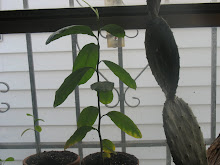
These guys really grow fast. Here are some updated photos of our liquorice plants. There are ten of them in total as of now. One of them is already over an inch tall.


Wednesday, December 22, 2010
Liquorice!
Are you one of those guys who still enjoys eating that red candy liquorice? I must admit that I too was very fond of the sweet and sugary flavor of the juicy red sweets. However, since then I have grown out of childish liquorice and I have developed a taste for the more mature version. This liquorice is the real deal.


This original black liquorice with all natural flavors tastes much better than the good old childhood candy. Also, real liquorice can help relieve a sore throat. Once you develop a taste for this stuff it will be very hard for you to even call the other version by the same name. After all, if it tastes like strawberry, why should it be called liquorice? This stuff has natural liquorice flavor, and the other stuff is just candy. You can't find something more real than this!
Actually, I may have exaggerated. I now have something a lot more real than even the black liquorice shown above. My father and I liked the real liquorice so much that we decided to have the real "real" thing. My father bought some liquorice seeds on the Internet, and now we have real liquorice growing on our kitchen window sill!
Here are some of the results thus far.

As you can see, some of the seeds have started to take root, and it looks like some green may be shooting out of the top. Once these plants grow to a large enough size, we may try to plant them in the backyard to see how they grow. Imagine a backyard full of liquorice plants. I wonder if it will smell as good as the candy.
Subscribe to:
Posts (Atom)